📌 Article at a Glance:
High energy drain: Continuous filtration, heating, and water circulation drive pool energy costs up to 35% of total operating expenses.
The main culprit: Traditional single-speed pumps waste massive amounts of electricity by running at maximum output 24/7, regardless of how busy the pool is.
The modern solution: Switching to a variable speed drive (VSD) system like the AutoPool® 4.0 controller slashes pump energy costs by up to 65% by matching pump speed to real-time pool usage.
Why are swimming pools so expensive to operate?
Swimming pools are extremely energy intensive facilities to run. Operators must circulate, filter, heat, and disinfect large volumes of water continuously to meet safety standards. As energy prices rise, these requirements create growing financial burden. In many facilities, energy costs account for up to 35% of total operating expenditure, often exceeding staff costs.
Where does most energy loss occur?
Energy loss in swimming pools is rarely the result of a single issue. It is usually caused by multiple systems operating inefficiently at the same time.
Common sources of unnecessary energy consumption include:
- Circulation pumps running constantly at full speed
- Excessive filtration that increases backwashing frequency
- Water loss through backwashing and evaporation
- The need to heat replacement water
- Higher ventilation demand to manage humidity
Each of these factors increases electricity usage and drives up running costs.
Why do traditional pool pumps waste energy?
Most pool circulation pumps are designed to run at a fixed speed. In practice, this means they operate at maximum output all day, regardless of how busy the pool is. Bather load changes constantly, but pump performance does not. Energy is therefore consumed even when circulation demand is low, such as overnight or during quieter periods.
How can energy use be reduced without affecting water quality?
Energy savings are achieved by aligning circulation and dosing performance with actual pool usage. Rather than running pumps at full speed, flow rate can be adjusted in response to chlorine demand. This ensures that water quality is maintained while avoiding unnecessary energy consumption.
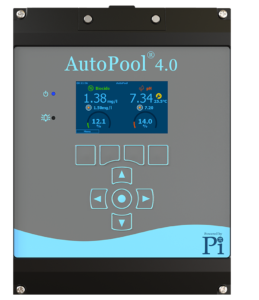
What role does the AutoPool®4.0 pool controller play?
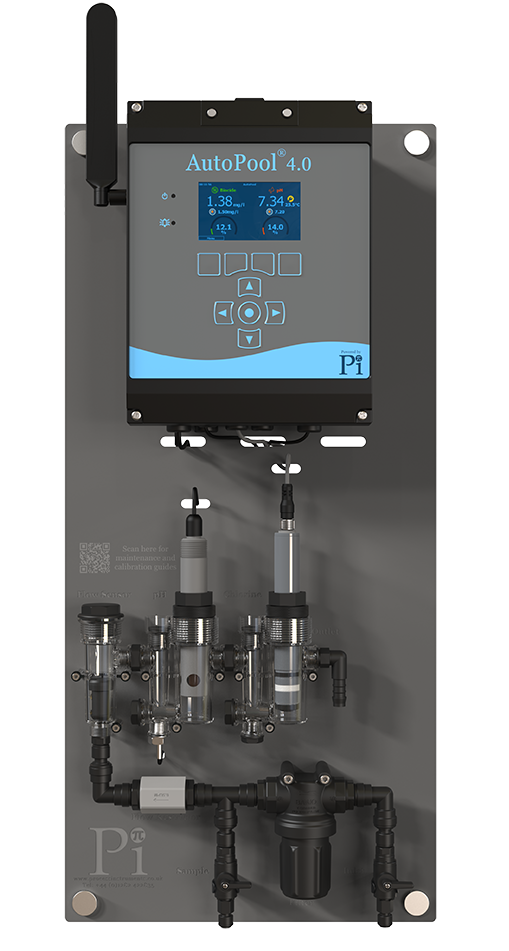
The Autopool®4.0 integrates pool dosing with broader system control. Its purpose is to manage essential pool processes more efficiently.
It supports:
- Accurate chemical dosing to maintain recommended chlorine levels
- Variable speed drive (VSD) control of circulation pumps
- Control of auxiliary systems such as lighting and heating
By linking pump output to dosing demand, energy use can be reduced without compromising pool safety.
How does VSD control reduce pump energy consumption?
VSD allows pump speed to change in response to real time conditions.
With VSD control enabled:
- Pump speed is reduced during periods of low bather activity
- Flow rate increases only when chemical demand rises
- Energy use drops significantly during quieter hours
This approach can reduce circulation pump energy costs by up to 65%.
Can pump speeds be adjusted at different times?
Yes. The Autopool®4.0 allows operators to define different operating conditions throughout the day and week.
Key capabilities include:
- Day and night operating models
- Different speeds at specific times
- Schedules that reflect varying usage patterns
This flexibility makes the system well suited to swimming pools with inconsistent occupancy.
What if the pool pump is oversized?
Running pumps at reduced speed improves reliability. Mechanical stress is lower, and motors experience less wear.
As a result, operators benefit from:
- Longer motor lifespan
- Reduced maintenance requirements
- Lower long term operating costs
Energy efficiency and asset protection are achieved at the same time.
How does this improve overall pool environmental control?
Stable circulation improves temperature consistency and reduces unnecessary evaporation. Lower evaporation reduces humidity, which in turn reduces ventilation demand.
The outcome is a more controlled pool environment with lower energy requirements across multiple systems.
Summary: The problem and the practical solution
Swimming pools consume large amounts of energy due to constant high speed pump operations. Excessive filtration, and heat and water loss. These factors push energy costs to as much as 35% of total operating expenses.
By using a pool controller with integrated VSD control such as the AutoPool®4.0, the circulation performance can be matched to real demand. This enables significant energy savings, extends equipment life, and maintains safe water quality standards.
To learn more get in touch